
PDF · A4 · 72 KB · Free, no sign-up. For home and classroom use.
How to draw a skull
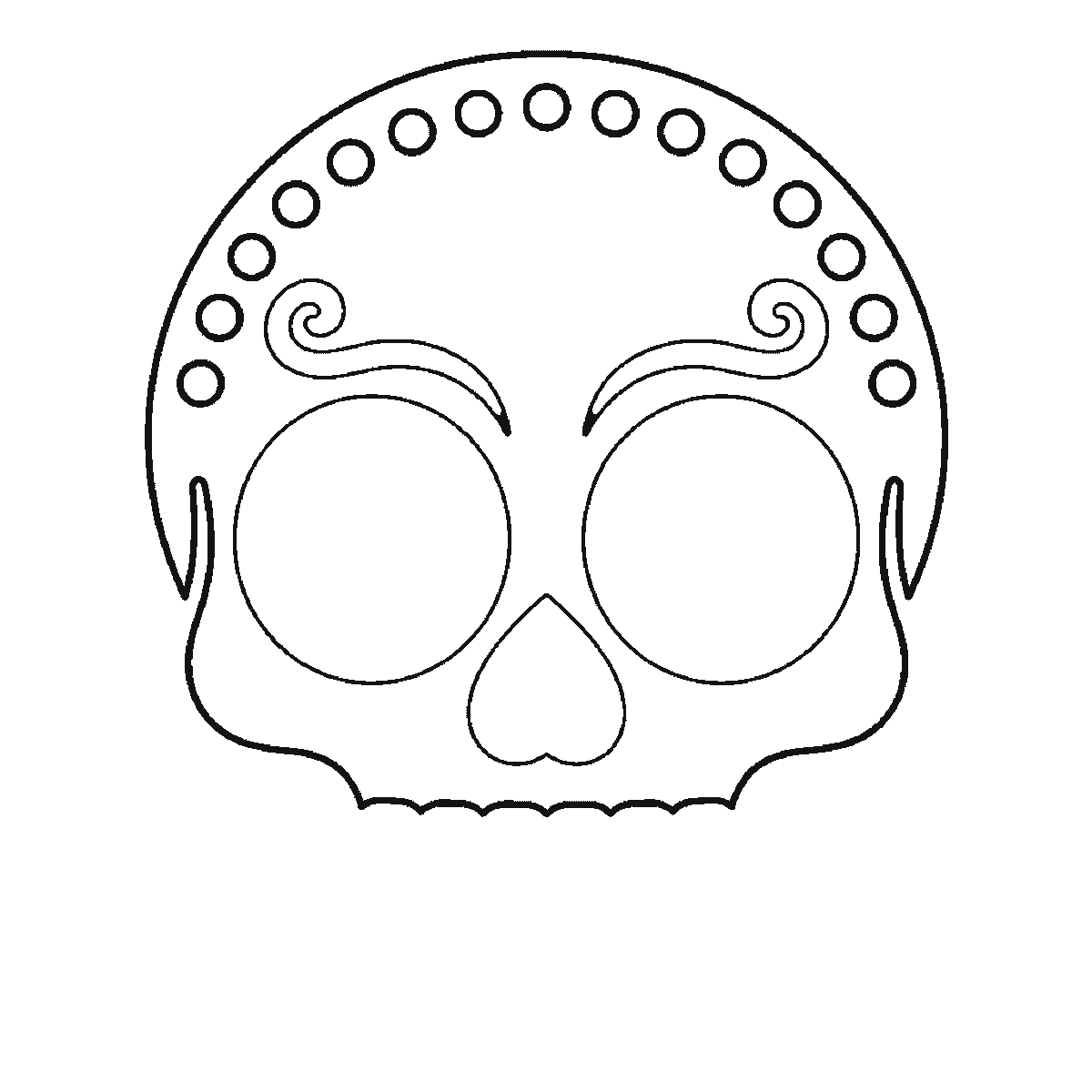
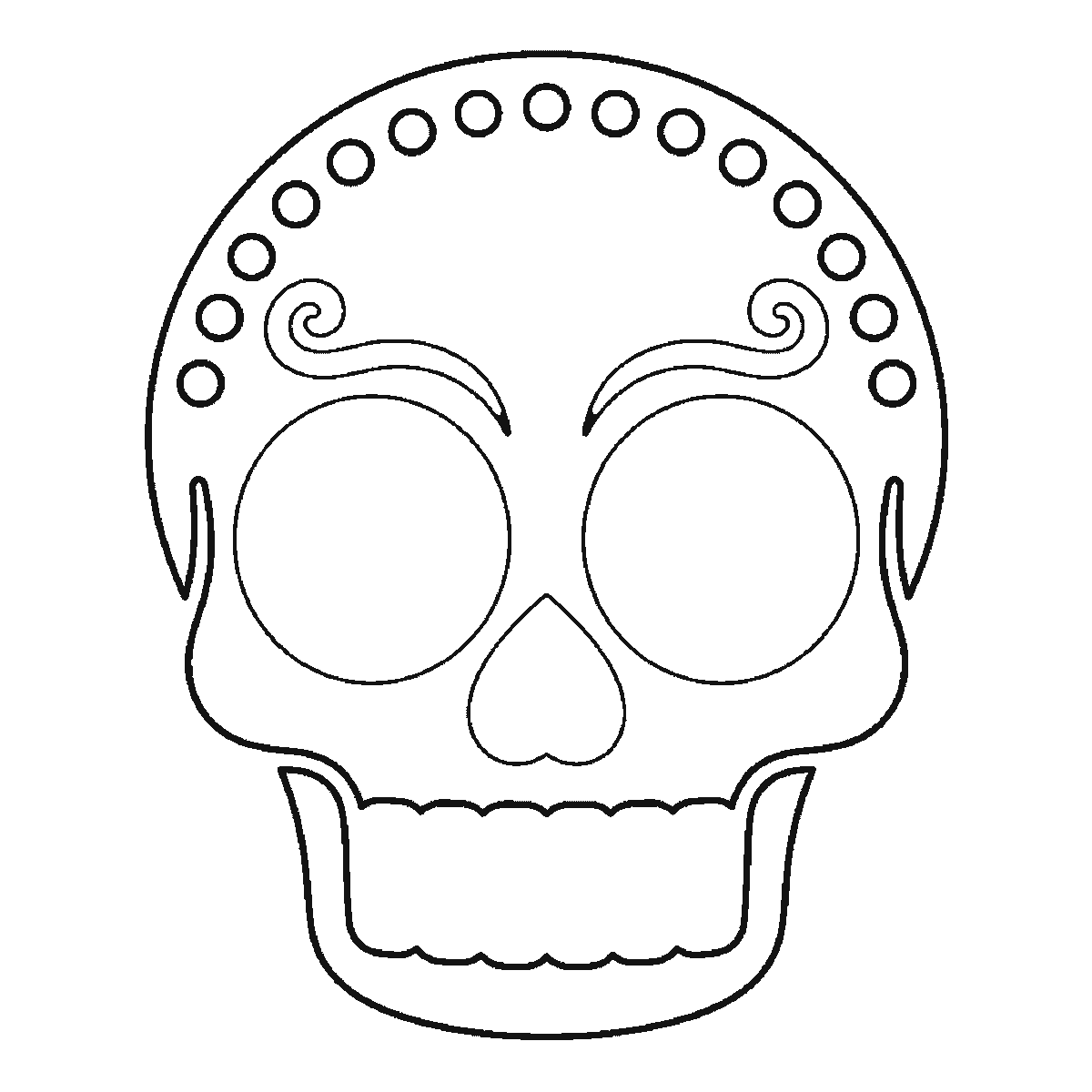
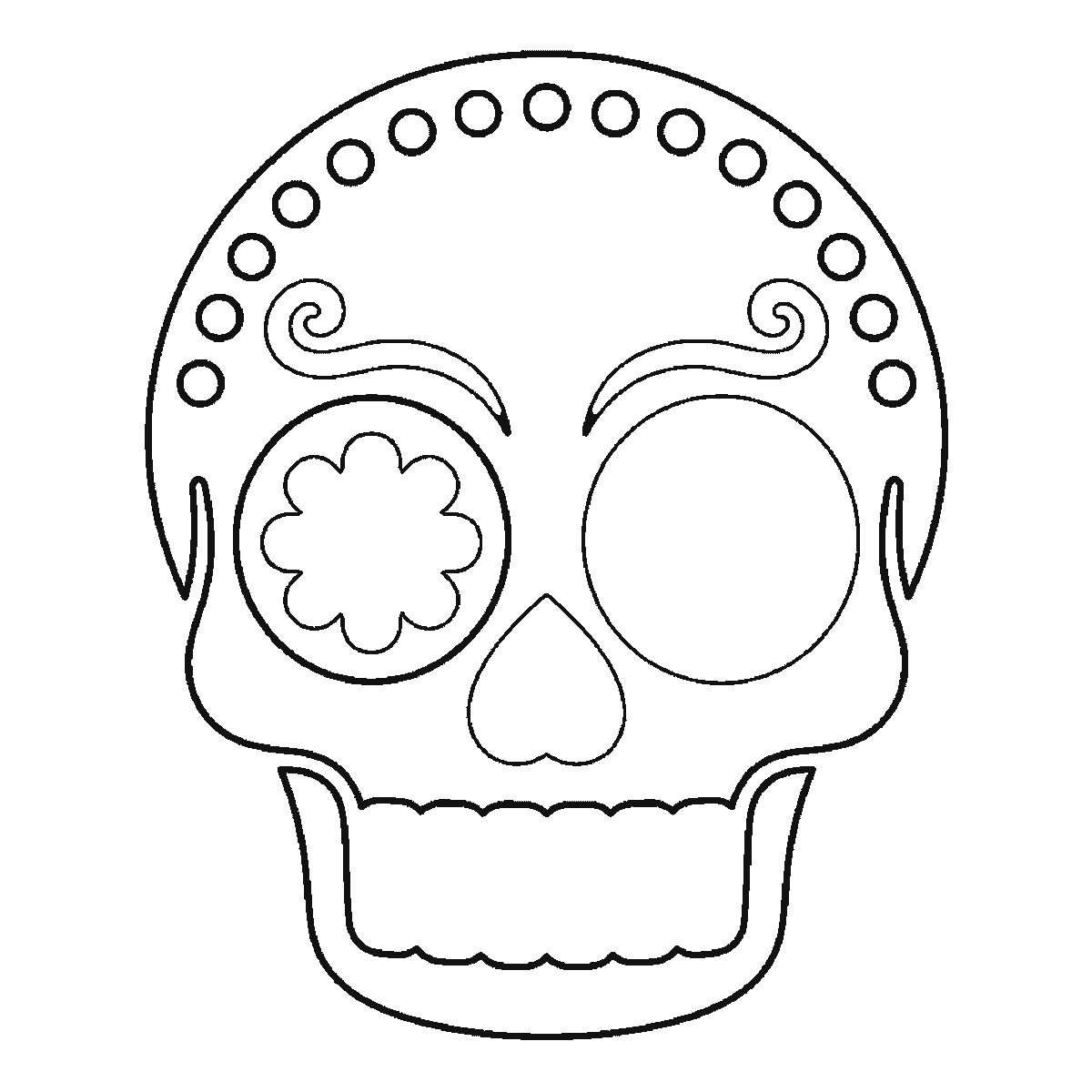
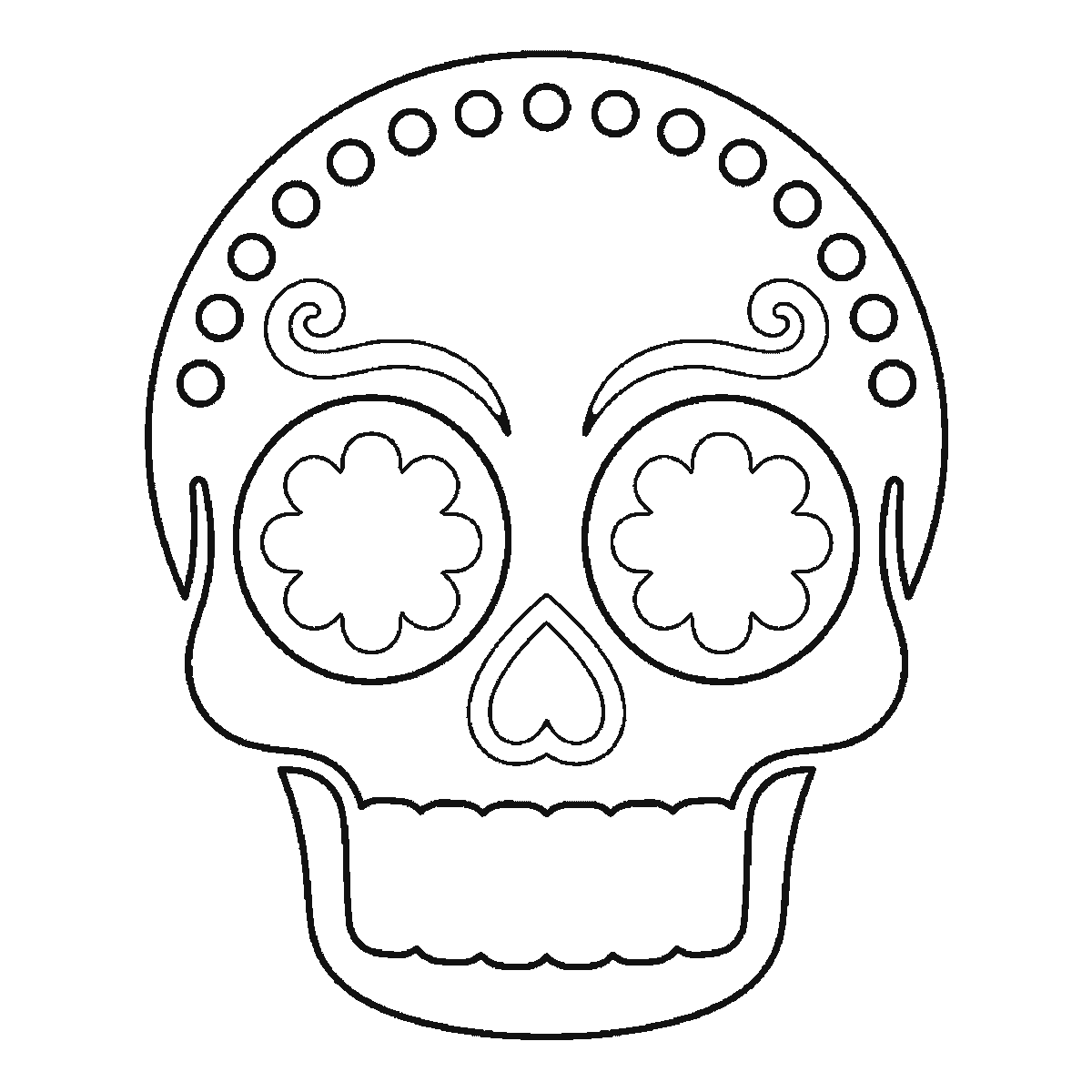
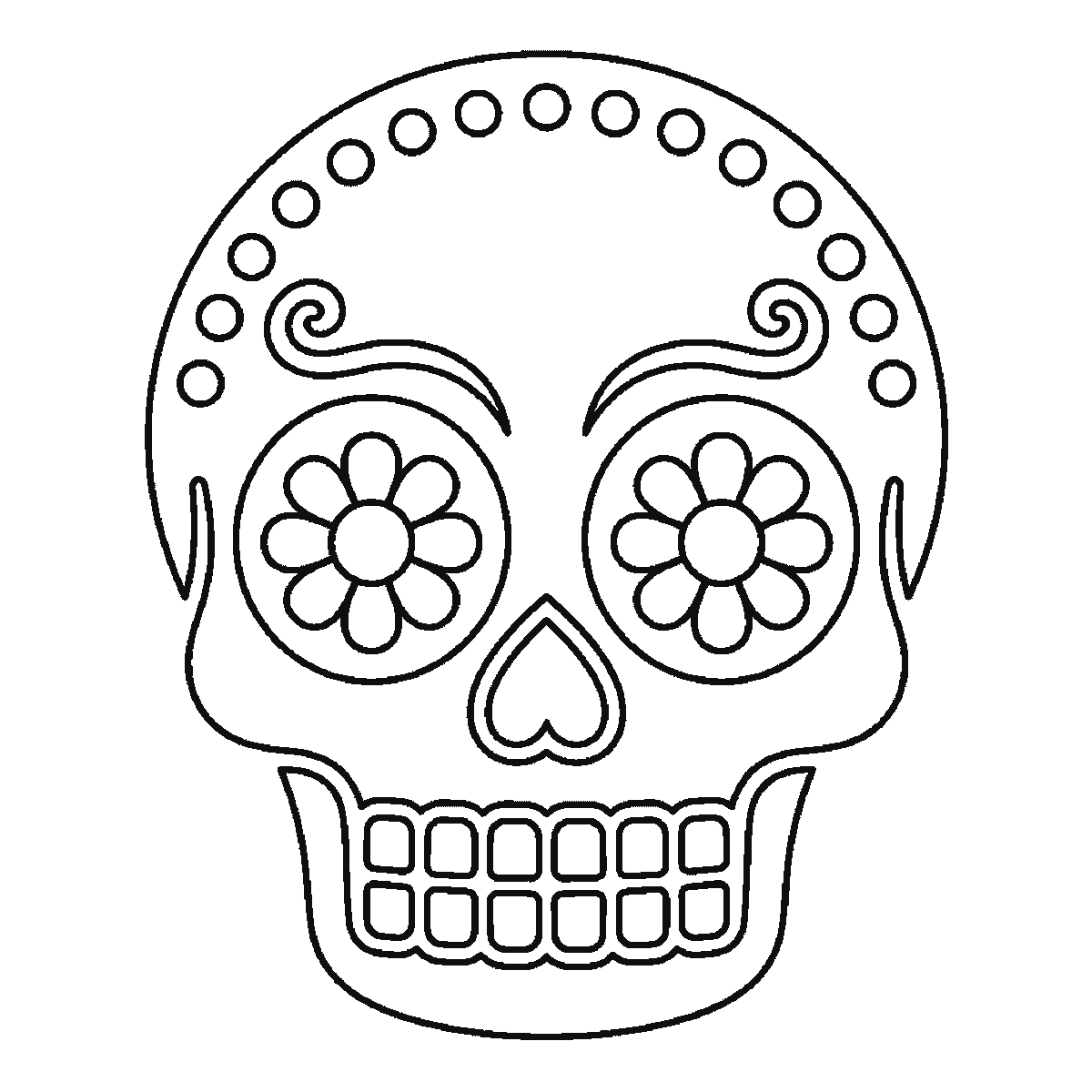
Six frames, one decorated sugar skull. Almost the whole outline lands in the first frame — then the jaw, a flower in each eye socket, and the teeth last.
This sheet is one drawing of a decorated sugar skull — a calavera, the folk-art kind you see cut from paper or iced onto a biscuit — shown six times, each frame keeping the last one's lines and adding to it. It is a pattern rather than an anatomy study, and the sheet is built to be copied and then coloured in.
Frame one is a big step and it is worth saying so plainly: it carries a little under half the ink on the finished drawing. What arrives is the whole outline of the skull — the domed cranium, the cheekbones, the hooks at the sides of the jaw — plus the ring of small circles running round the top of the head, the two spirals above the brows, the two curved brow lines, both empty eye sockets and the heart-shaped nose opening. In other words, everything except the mouth, the flowers and the teeth.
That makes the first frame the one to slow down over, and the cranium is where to spend the time. It is close to a circle but wider than it is tall, and it should sit high on the page with a clear gap underneath for the jaw, which does not arrive until frame two. If the dome comes out too tall the whole drawing reads as a real skull rather than a decorated one, which is not what this sheet is.
The ring of dots follows the curve of the cranium rather than sitting on a straight line, and the dots should be the same size but unevenly spaced — a perfectly regular ring makes the head look machine-stamped. The two spirals go above the brows, one each side, curling outwards. They are the easiest part of the drawing to make expressive: tightened and low they read as a frown, loosened and high they read as surprise.
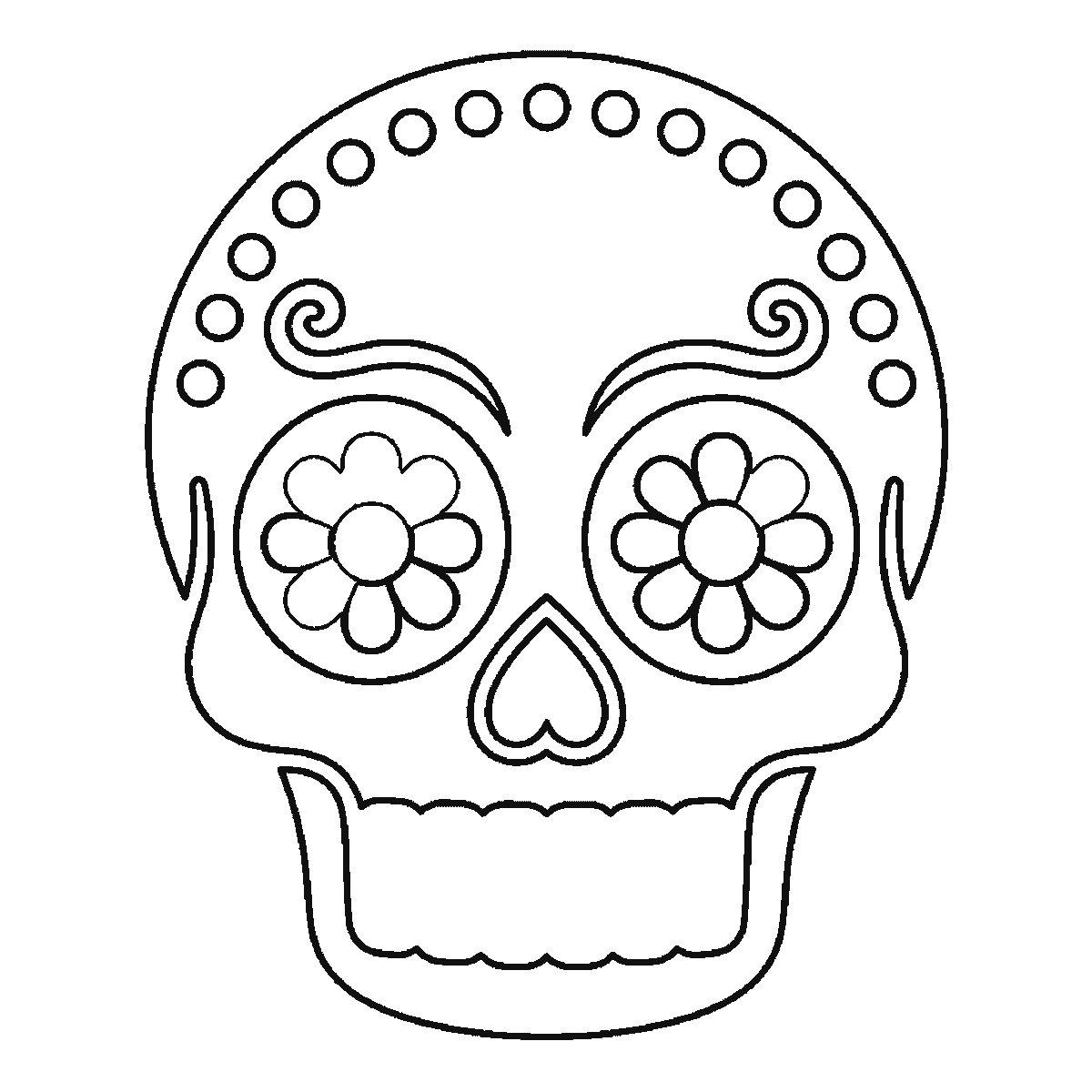
Frame two is the jaw — a broad U-shape hanging below the cheekbones with a scalloped edge along its lower rim. It is empty at this point, and it stays empty for four more frames. Frames three and four then put a flower inside each eye socket, one at a time, and the fourth frame also brings the heart-shaped nose up to full weight. Each flower is a ring of rounded petals around a small centre; drawing them one socket at a time is much easier than trying to match two at once, which is presumably why the sheet does it that way.
The twelve teeth are the last frame, all of them at once — two rows of six rounded squares filling the jaw. Keep them square rather than pointed and leave a visible gap between each one. Pointed teeth turn the calavera into something menacing, and the whole point of the form is that it is cheerful. It is a decorative object and a festival ornament, not a warning.
The frames run from the largest closed shape to the smallest, which is why the outline and the dots come first and the teeth come last. That order is easy to copy from and it is not a claim about how a skull should be drawn. Anybody who lays in the jaw and the cranium together as one silhouette, then decorates, is working the way most people who draw these actually work, and will finish with the same picture.
The download is one A4 sheet holding all six frames in plain black outline on white, with no shading anywhere, so it prints on a tired printer. This is one of the best subjects on the site for colouring afterwards: a calavera is traditionally bright and busy, every enclosed shape on it can take a different colour, and there are more separate closed areas here than on almost any other sheet we make.
If you draw it a second time, change what goes in the sockets. Flowers are the classic, but the same two circles will take spirals, a web, a pair of hearts or a simple sunburst without touching a single other line on the page. That is the useful thing about a pattern-based subject: the structure is fixed and the decoration is entirely yours, so a second attempt is a design exercise rather than a repeat of the first.
Before you start
- Draw the cranium wider than it is tall and leave a clear gap below it for the jaw, which does not arrive until frame two.
- Space the ring of dots unevenly. Perfectly regular spacing makes the head look stamped rather than drawn.
- Do one eye socket completely before starting the other — matching two flowers at once is much harder than copying the first.
- Keep the teeth square with gaps between them. Pointed teeth turn a cheerful ornament into something else entirely.
Published Updated 715 words
The six steps
The steps go from the largest shape to the smallest, which is an easy order to copy. It is not the only order, and it is not a rule — if you would rather start somewhere else on the sheet, do.
Step 1
Step 2
Step 3
Step 4
Step 5
Step 6
More in this section
How to draw a Halloween pumpkin
Six frames, one carved pumpkin. The middle rib with its face comes first, and the curling tendril last.
Step sequence made by us from a single drawing: each step keeps the lines of the one before it and adds to them.

How to draw a Christmas tree
Six frames, a decorated tree with presents underneath. The tiers arrive by size and already decorated, the star halfway, the presents last.
Step sequence made by us from a single drawing: each step keeps the lines of the one before it and adds to them.
How to draw ice cream
Six frames, two ice creams: a three-scoop sundae in a tall glass beside a two-scoop cone. The cone's scoops first, the cherry last.
Step sequence made by us from a single drawing: each step keeps the lines of the one before it and adds to them.
How to draw a cake
Six frames, one layer cake with a slice cut out. The wavy icing top first, then both cut faces showing the layers, and the five cherries at the end.
Step sequence made by us from a single drawing: each step keeps the lines of the one before it and adds to them.


