
PDF · A4 · 59 KB · Free, no sign-up. For home and classroom use.
How to draw a football
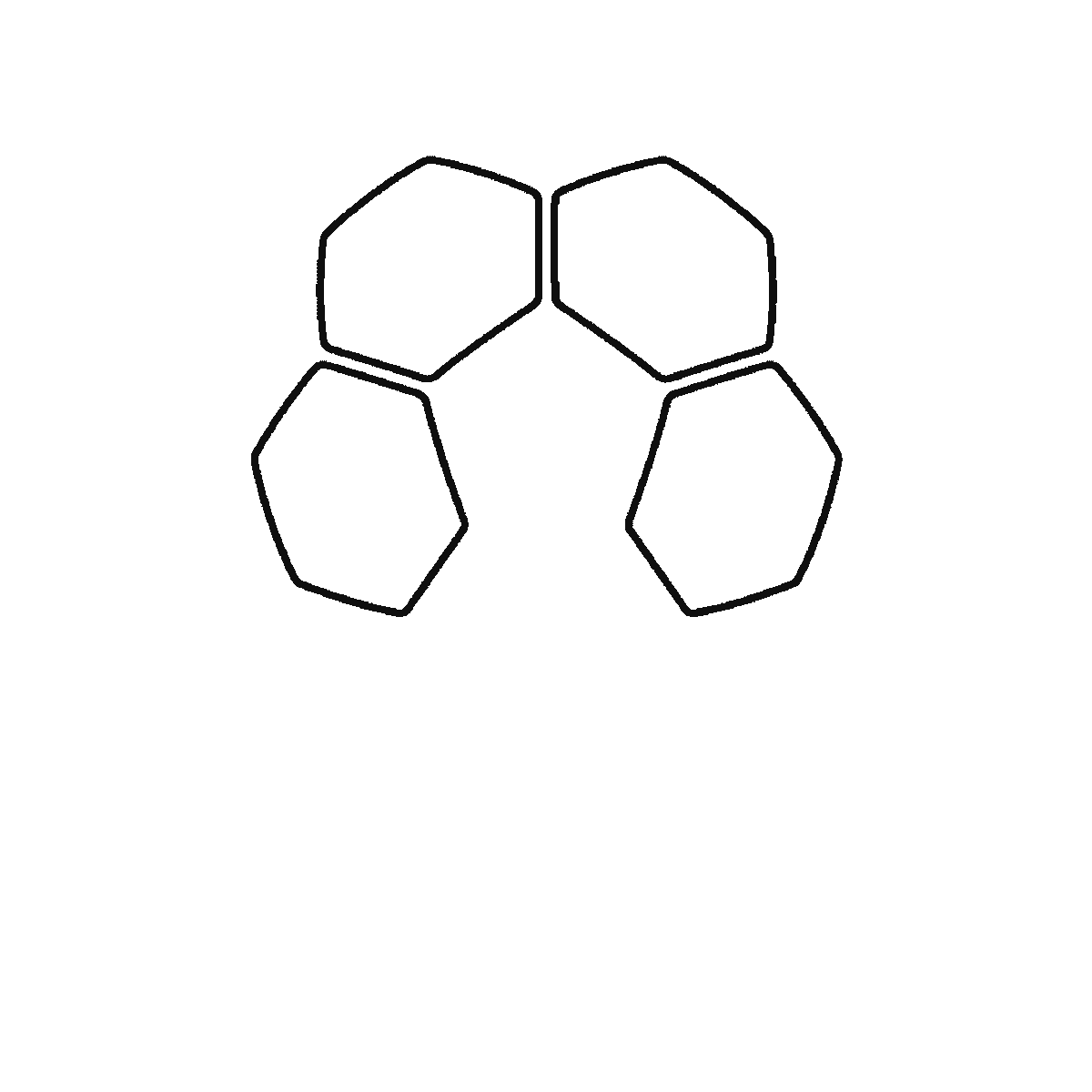
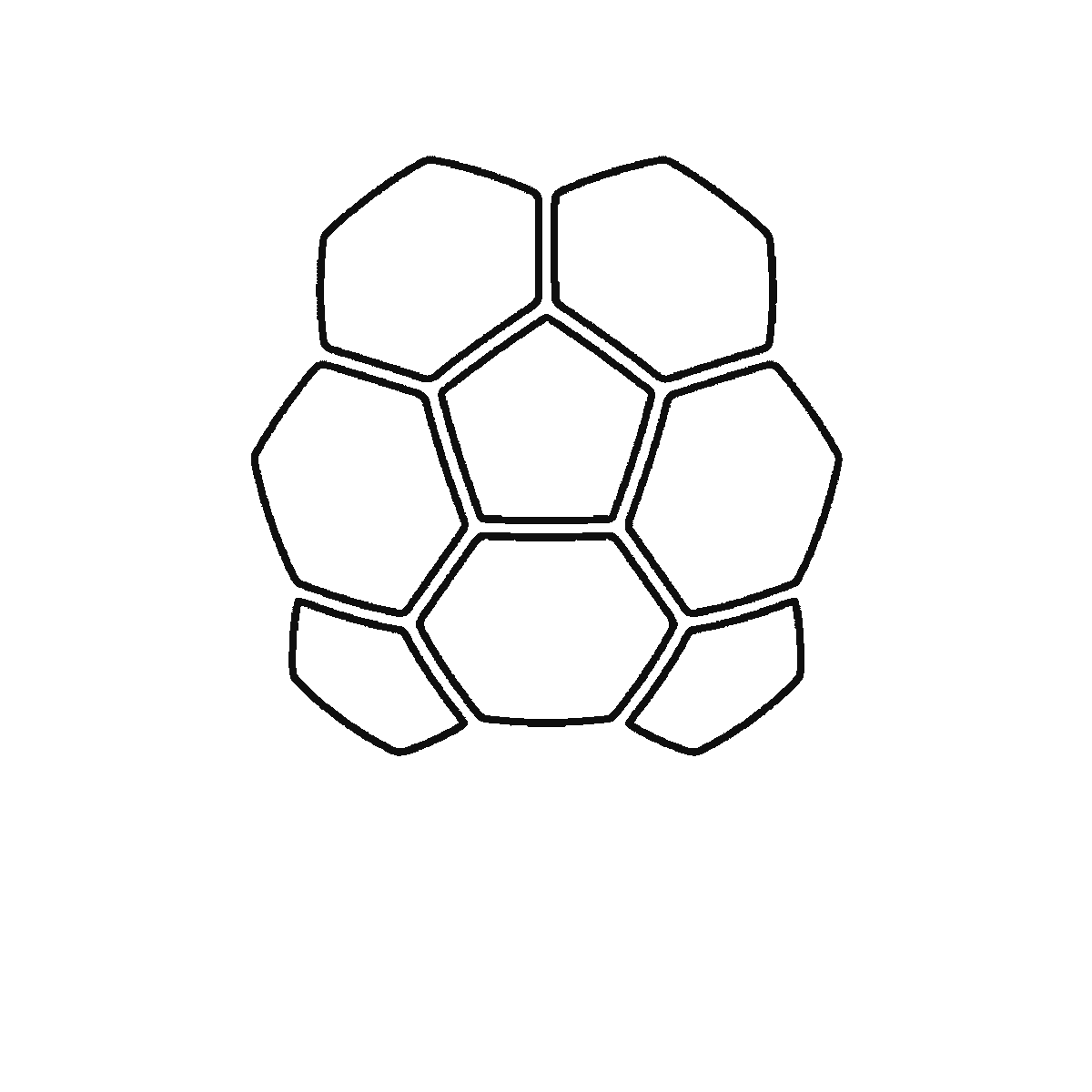
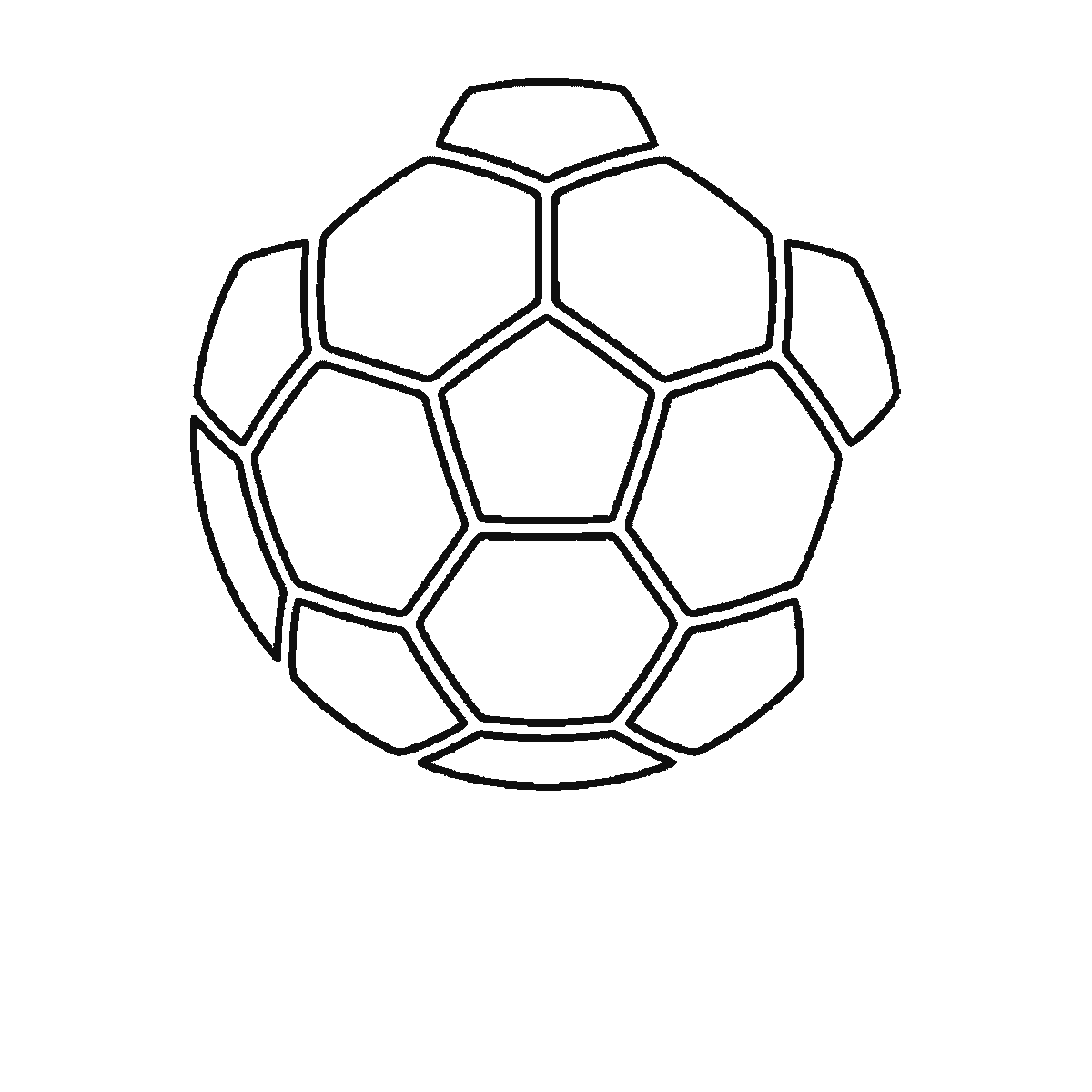
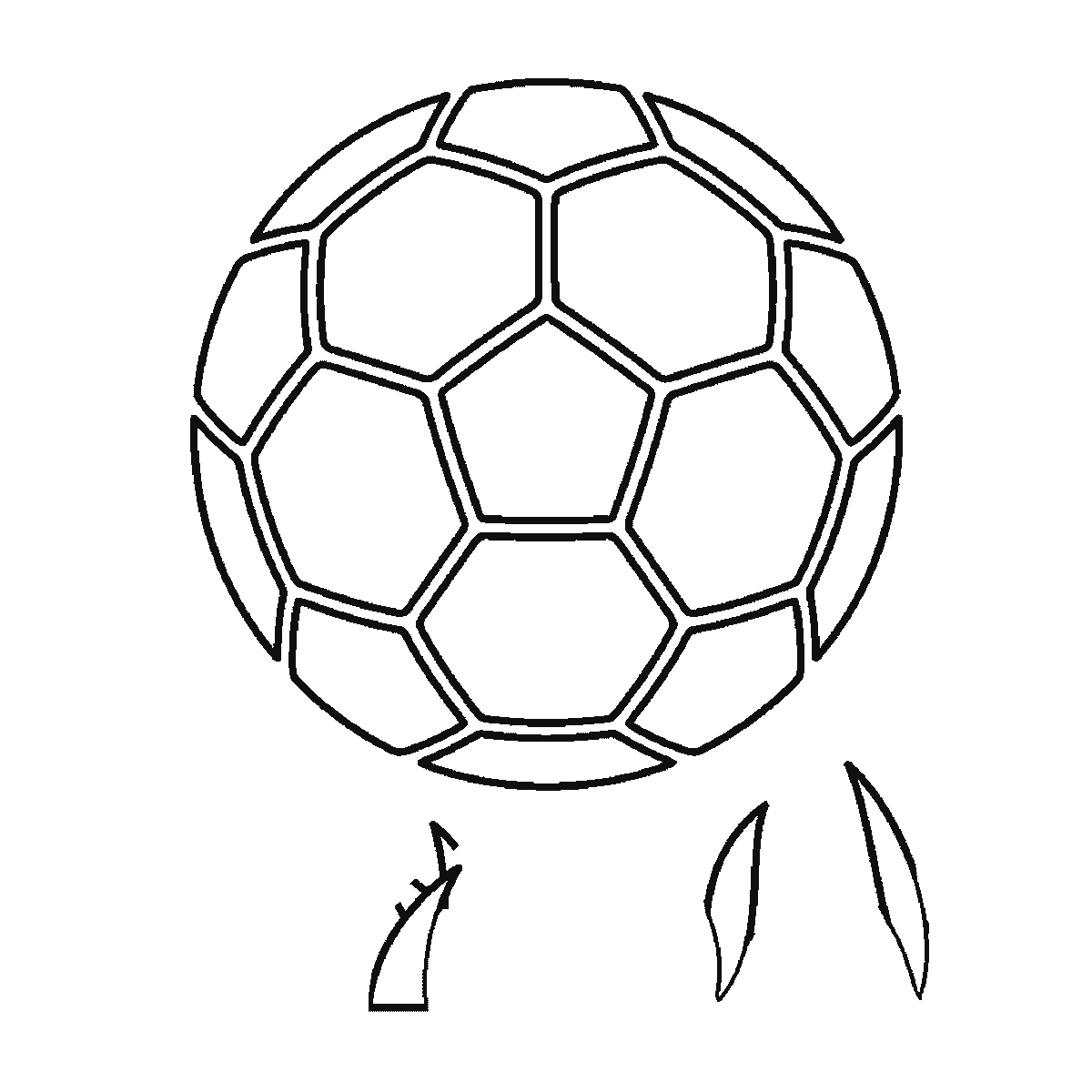
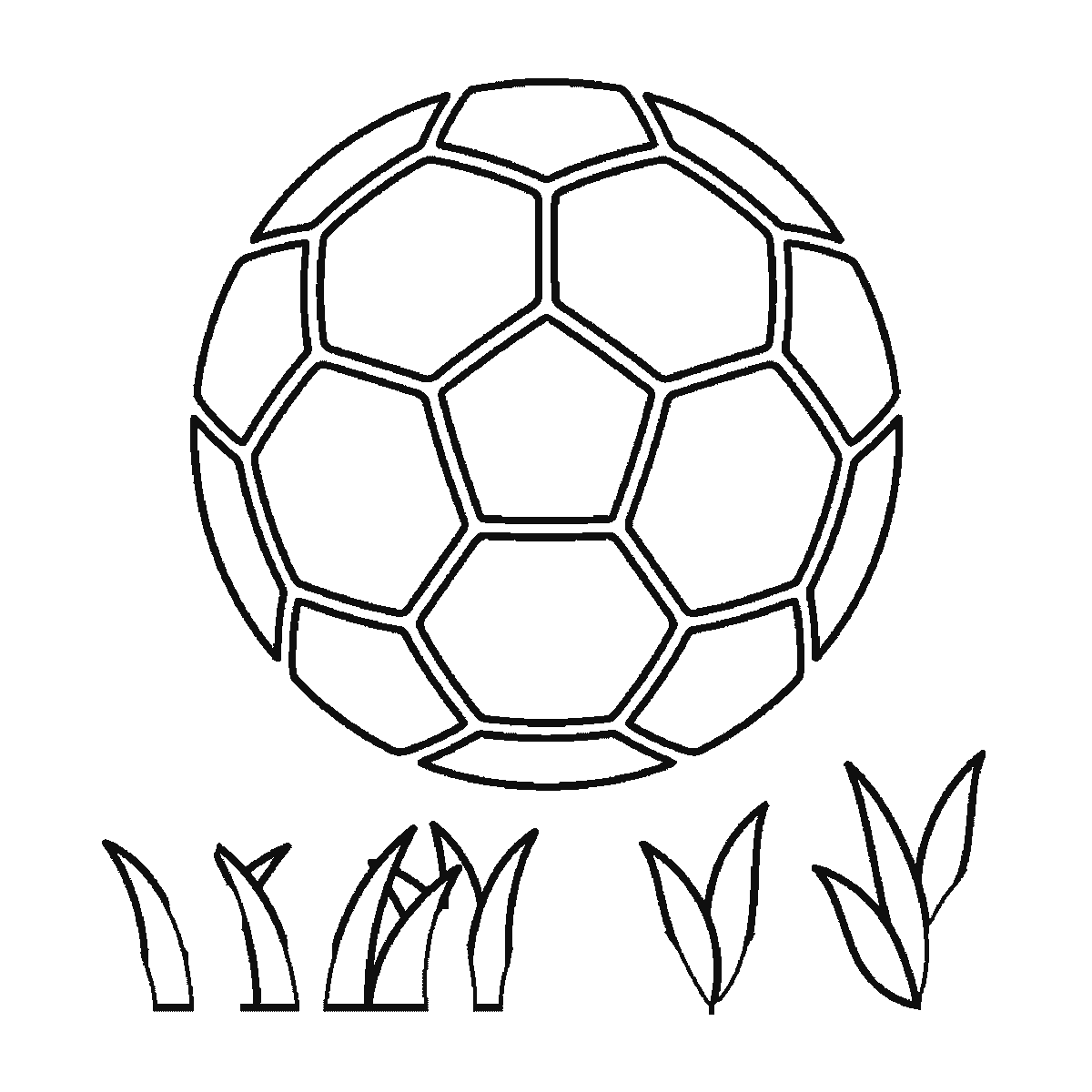
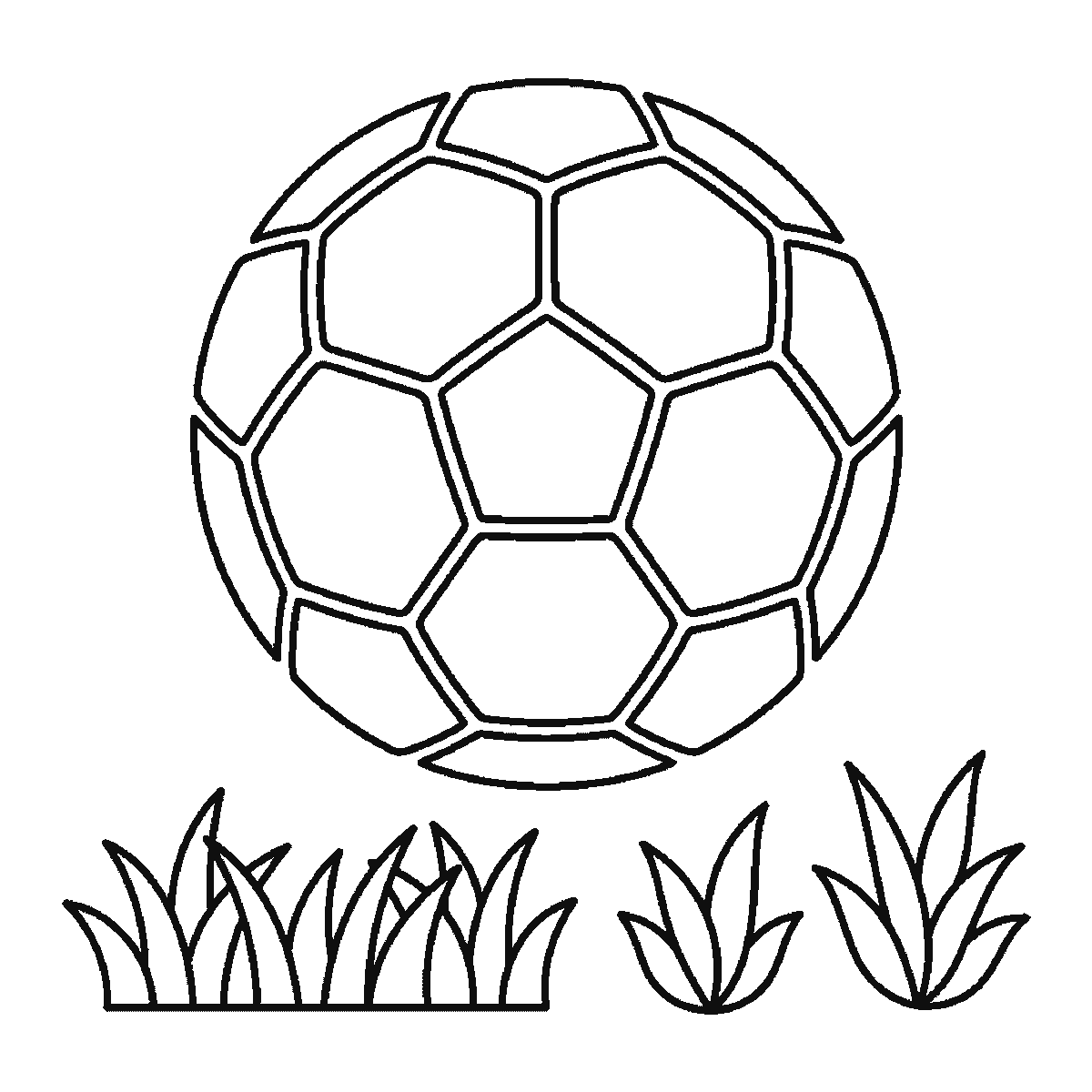
Six frames, one football above the grass. The panels first, then the outline that closes round them, then the grass.
A football looks like the easiest thing on this site and is quietly one of the hardest, for a reason worth understanding before you start: it is a flat circle that has to read as a sphere, and the only thing doing that job is the panels. Draw the panels flat and you have a circle with shapes in it. Draw them curved and you have a ball.
Frame one is not the circle. It is four panels — a small cluster of pentagons and hexagons floating in the middle of the page — and the ball's outline does not close until the third frame. That is the reverse of how most people draw a football, and it is worth knowing before you copy, because it means the panels decide the size of the ball rather than the other way round.
If you would rather work the usual way round, draw the circle lightly first and treat the sheet's panel frames as the filling-in. Either way the pattern starts from one pentagon near the middle — five sides, roughly regular, sitting close to the centre but not exactly at it. Placing it slightly off-centre is what makes the ball look photographed at a natural angle rather than diagrammed.
From each side of that pentagon a hexagon grows outward. This is the pattern that makes a football a football: every pentagon is surrounded by hexagons, and no two pentagons ever touch. If you find yourself drawing two five-sided shapes next to each other, something has gone wrong and it will be visible to anybody who has kicked one.
Now the part that does the real work. As the panels move away from the centre of the ball and towards its edge, they must get narrower and more curved. A hexagon at the rim is squashed almost flat and its outer edge follows the circle. A hexagon in the middle is nearly regular with almost straight sides. That progressive squashing is the whole illusion of roundness, and it is the same principle as stripes bending round a fish or patches wrapping round a giraffe.
The panel edges should also bow very slightly outwards rather than being ruled straight, because a real ball's surface curves between the seams. It is a small thing and it is the difference between a football and a geodesic diagram.
Work outwards ring by ring rather than jumping around the ball. Complete the ring of hexagons around the central pentagon first, then add the next ring of pentagons where three hexagons meet, and so on. Skipping ahead is how the pattern drifts out of alignment, and by the time you notice, the far side of the ball has no room left for the shapes it needs.
The grass below is drawn as separate tufts rather than a continuous line, each a small cluster of pointed blades of varying height. Three tufts at different sizes, spread apart rather than evenly spaced. The ball sits above them on the page, so nothing has to be drawn overlapping — the grass is context rather than a surface the ball rests on.
If you want a harder version of the same drawing, put the ball in shadow. One soft shape under it, matching its curve, is enough to plant an object on the ground, and it is a completely different exercise from drawing the object itself. The panels stay exactly as they are.
The frames go from the largest closed shape down to the smallest, which here means a first group of panels, then a second, then the ball's outline closing around them, then the grass in three goes. It is an easy order to follow and it is not a claim about the correct method — working from the silhouette inwards is the more usual way, and this sheet simply happens to do the opposite.
Before you start
- Draw round something circular for the outline. Every later line is measured against it.
- Never let two pentagons touch — every pentagon is surrounded by hexagons.
- Squash the panels flatter as they approach the rim. That is what makes the circle look like a sphere.
- Bow the panel edges slightly outwards rather than ruling them straight.
Published Updated 644 words
The six steps
The steps go from the largest shape to the smallest, which is an easy order to copy. It is not the only order, and it is not a rule — if you would rather start somewhere else on the sheet, do.
Step 1
Step 2
Step 3
Step 4
Step 5
Step 6
More in this section
How to draw a bow
Six frames, one tied ribbon bow. The hanging tails first, then the loops, the knot and the folds.
Step sequence made by us from a single drawing: each step keeps the lines of the one before it and adds to them.
How to draw fire
Six frames, one campfire. The main flame first, then the logs, the smaller flames and the sparks.
Step sequence made by us from a single drawing: each step keeps the lines of the one before it and adds to them.
How to draw a teddy bear
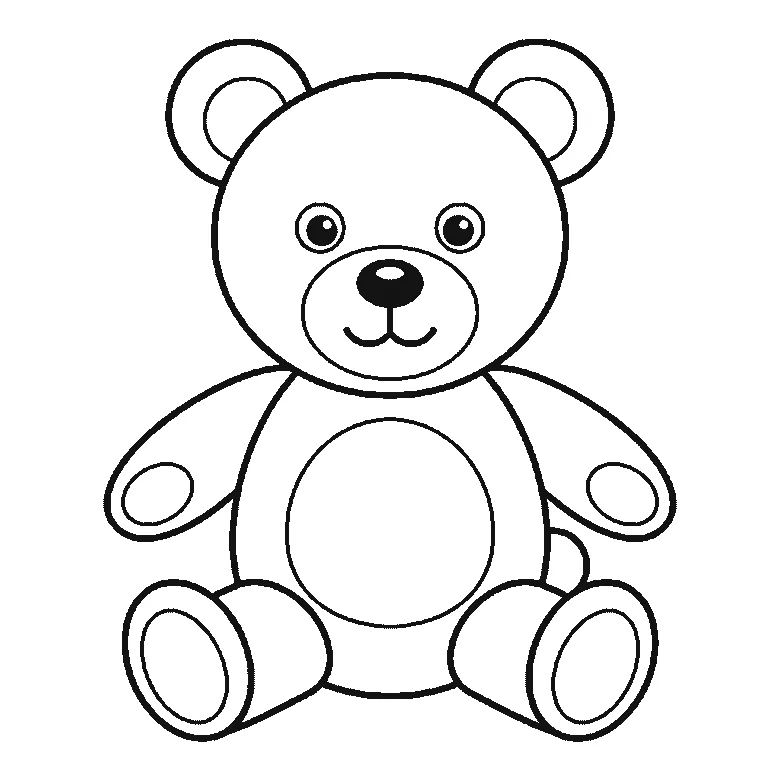
Six frames, one teddy sitting upright. A plain head circle first, then the body with the nose and mouth — and the ears one at a time, with the eyes right at the end.
Step sequence made by us from a single drawing: each step keeps the lines of the one before it and adds to them.
How to draw a guitar
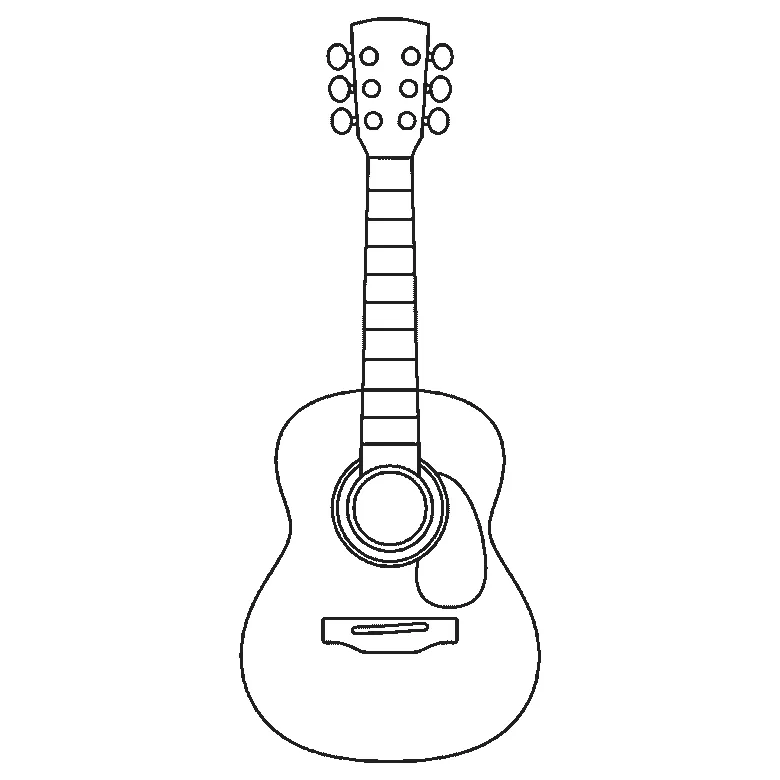
Six frames, one acoustic guitar standing upright. The body first, the headstock and tuning pegs second — and no strings anywhere, which is deliberate.
Step sequence made by us from a single drawing: each step keeps the lines of the one before it and adds to them.
How to draw a heart
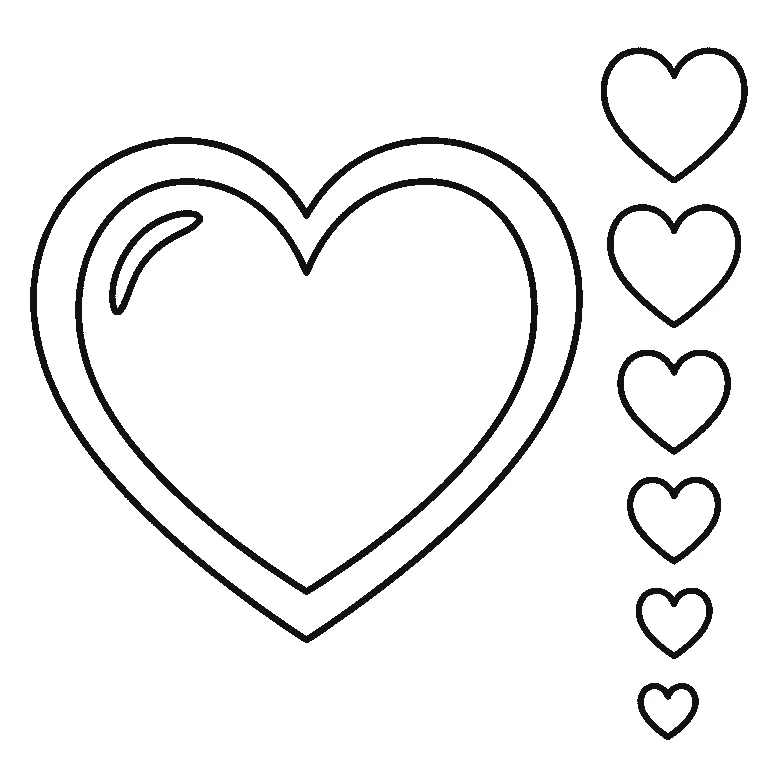
Six frames, one plain symmetrical heart with a wide border and six smaller ones. The inside comes first and the outline second.
Step sequence made by us from a single drawing: each step keeps the lines of the one before it and adds to them.
How to draw a knight
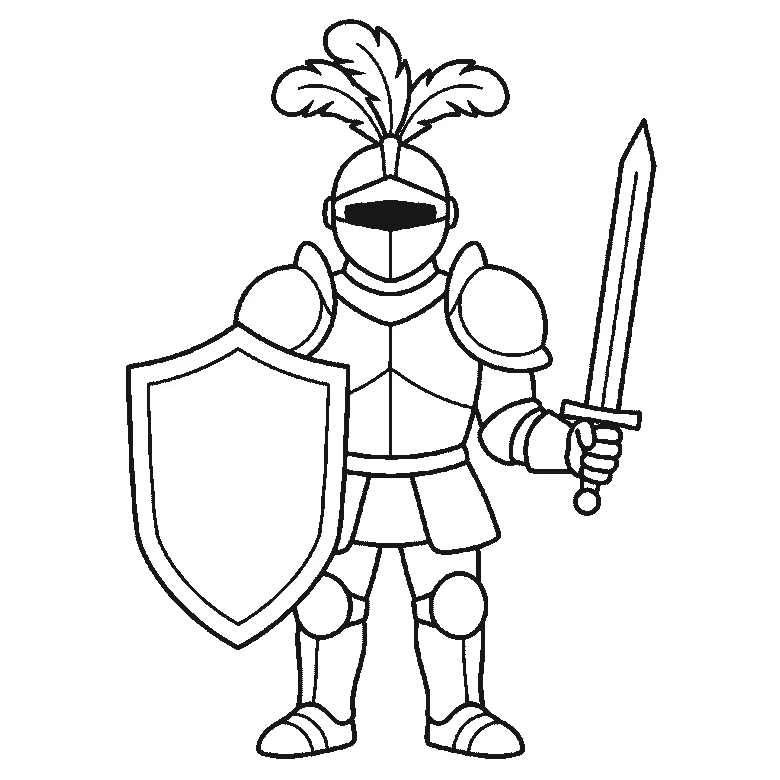
Six frames, one suit of plate armour with the visor down. The shield and the sword come first, and the helmet almost last.
Step sequence made by us from a single drawing: each step keeps the lines of the one before it and adds to them.
How to draw a house
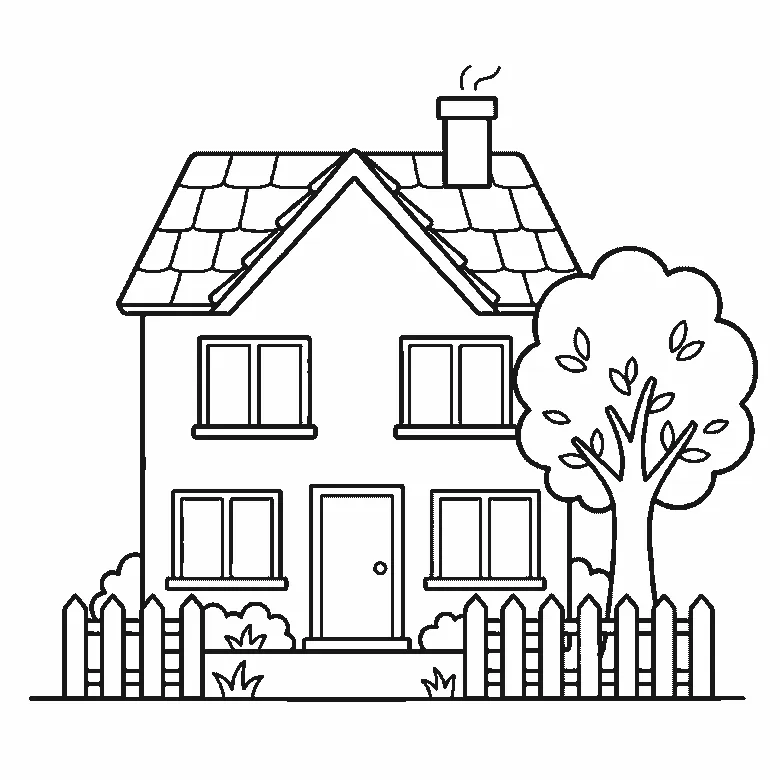
Six frames, one detached house with a garden. The walls and roofline first, then the windows, the door, the fence and the tiles.
Step sequence made by us from a single drawing: each step keeps the lines of the one before it and adds to them.


