
PDF · A4 · 80 KB · Free, no sign-up. For home and classroom use.
How to draw Earth
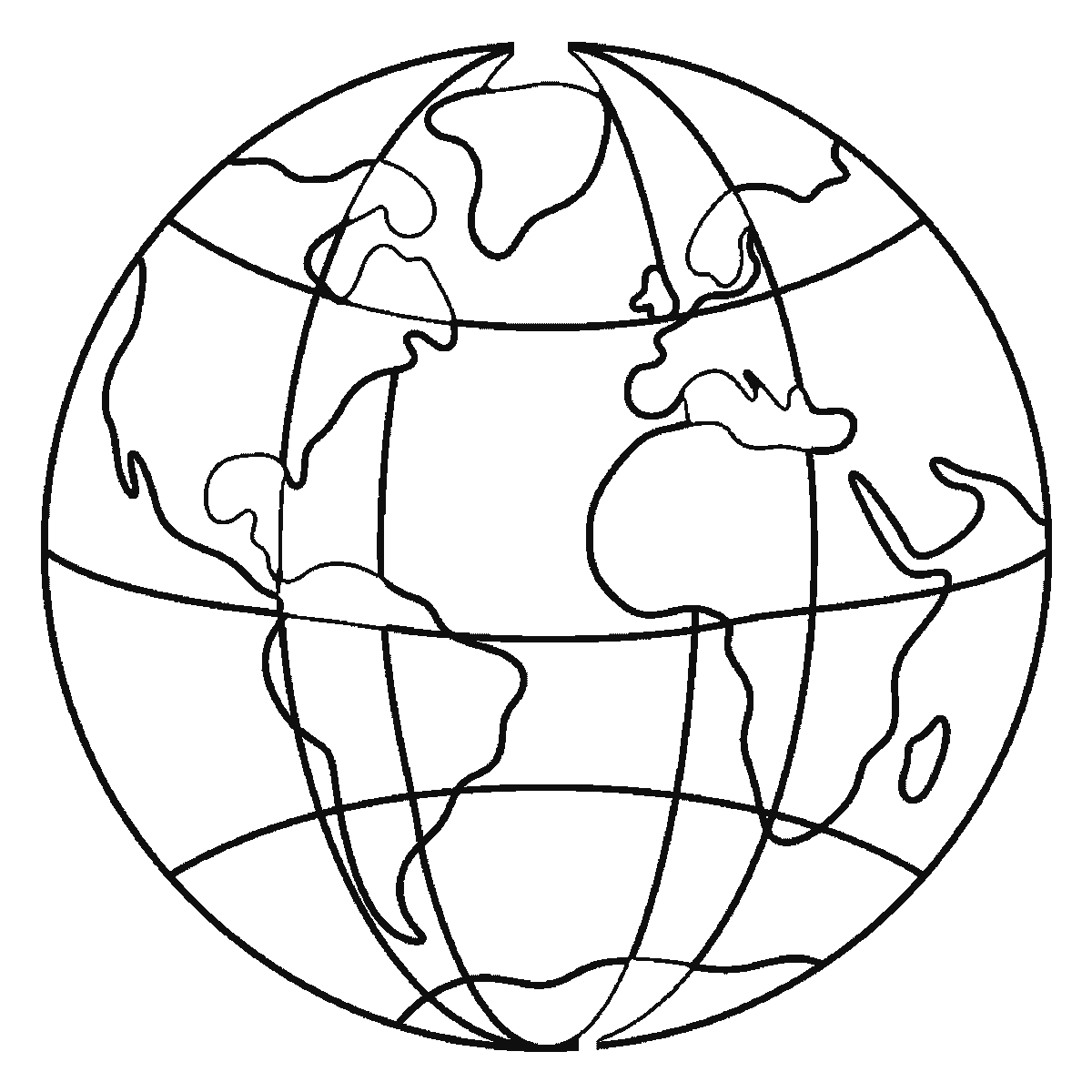
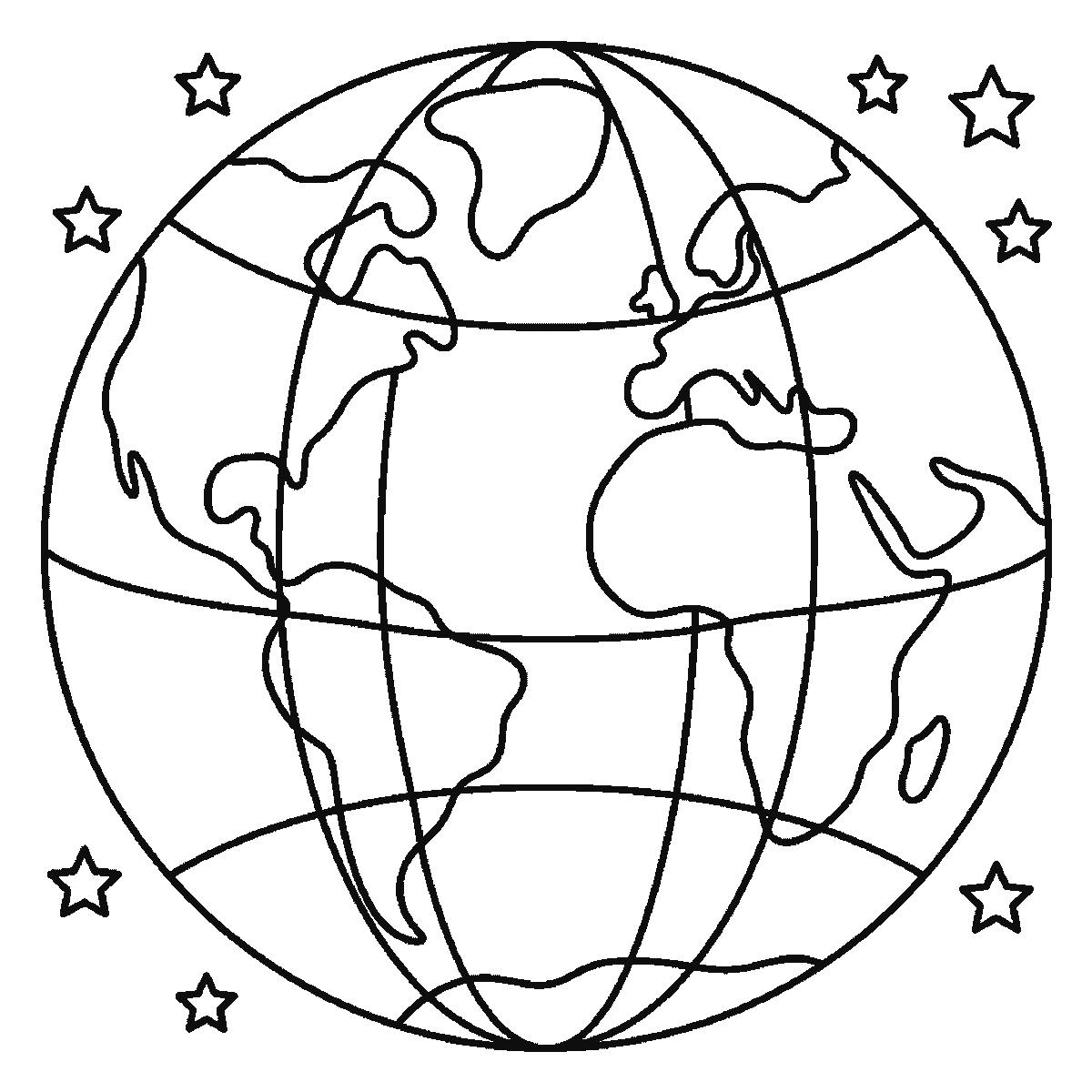
Six frames, one globe, revealed ocean-panel by ocean-panel rather than continent by continent. The land emerges as the white left behind, and the stars come last.
This sheet takes one drawing of the planet — a circle crossed by curved grid lines with continents on it and stars around the outside — and shows it six times over, each frame carrying the last one's lines and adding more. It behaves differently from every other sheet on this site and it is worth explaining why before you copy it.
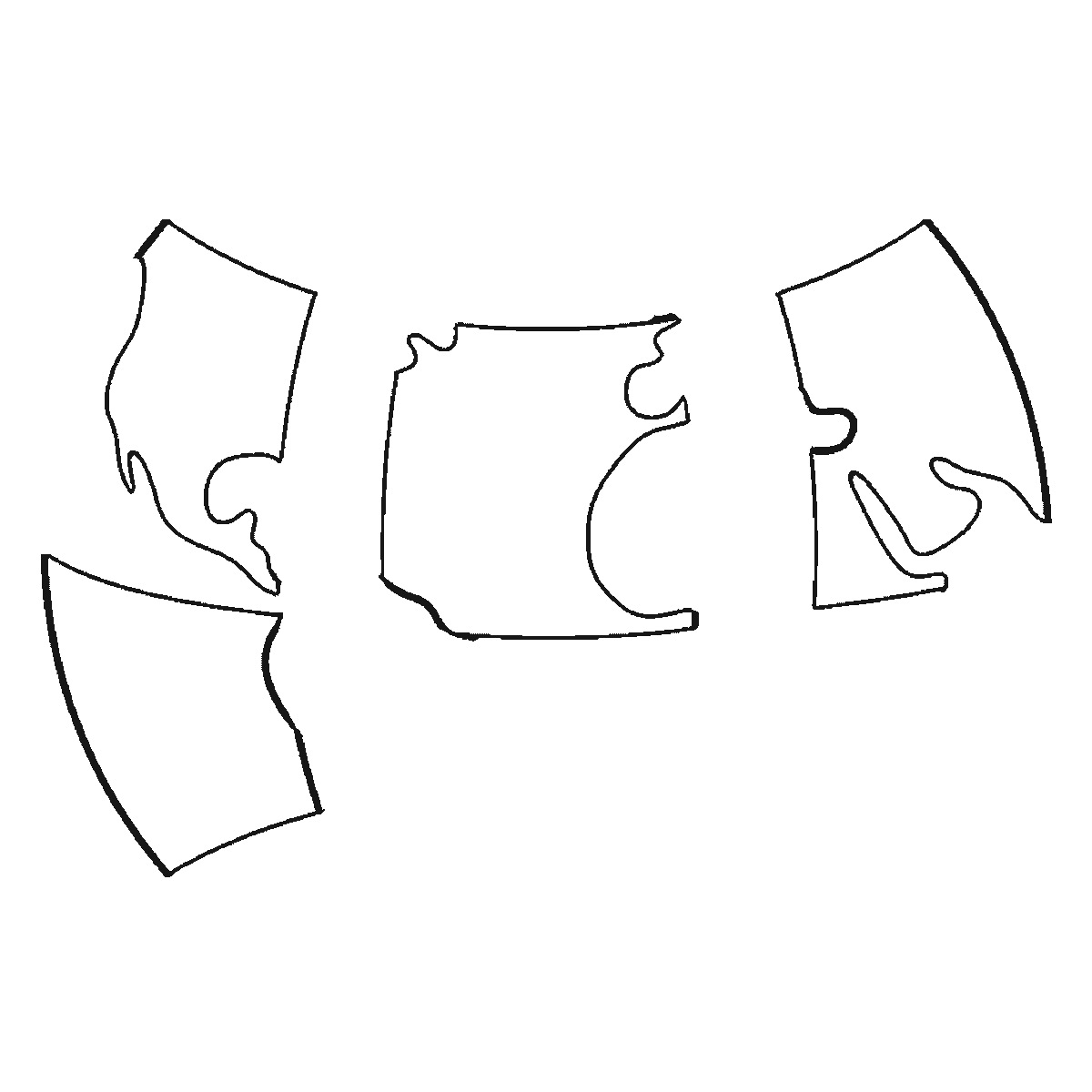
The drawing is built from a circle, three curved meridian lines running pole to pole, three curved parallels running across, and the coastlines. Between them those lines cut the ocean into a few dozen closed panels, and it is those panels the sheet reveals, one group at a time. So frame one is not a continent, and it is not the circle either. It is four disconnected curved patches of ocean floating in white space with nothing joining them — no rim, no grid, no land. If you print this sheet and hand it to somebody without telling them what it is, they will not guess, and that is not a fault in the drawing.
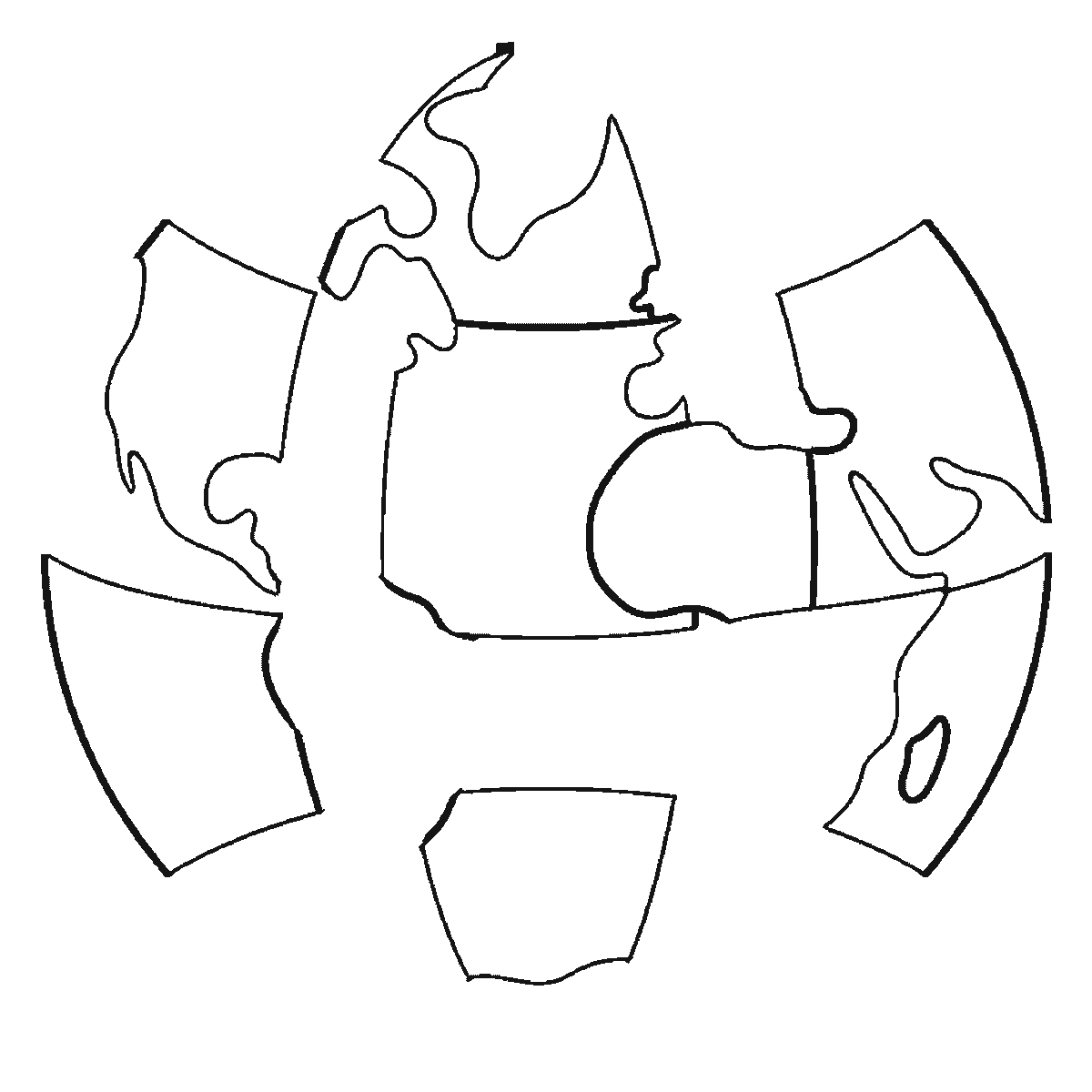
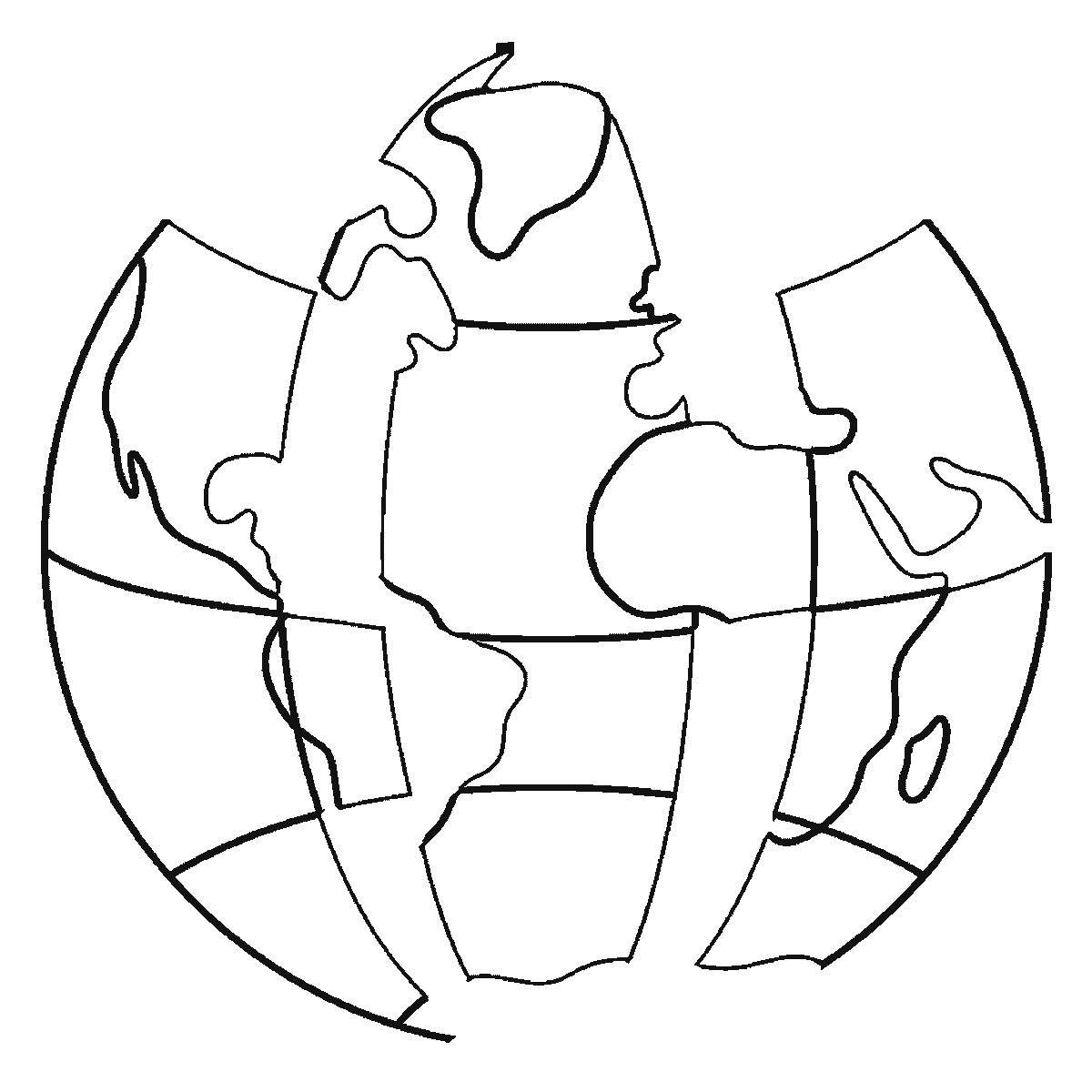
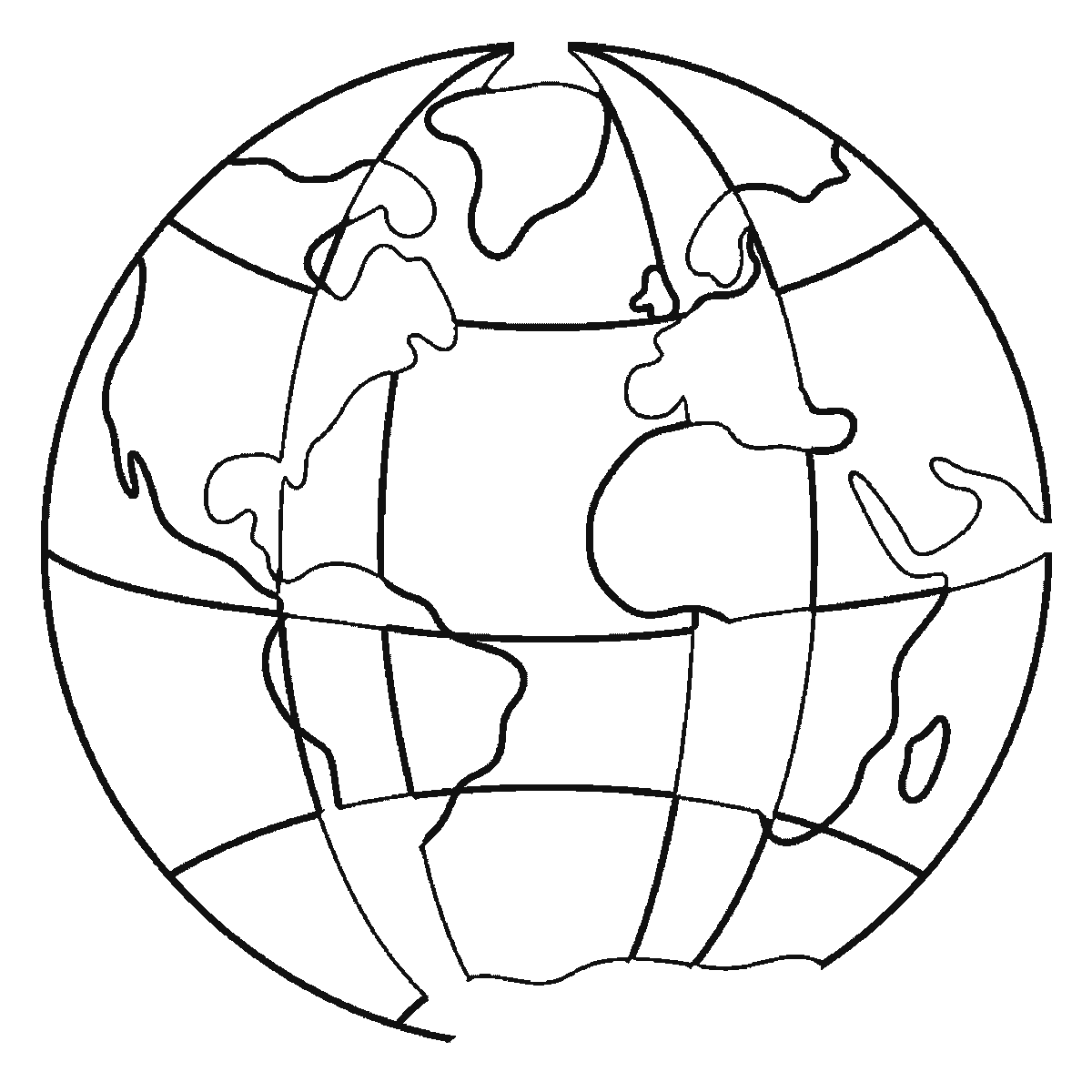
The continents appear as the white areas left between the panels. They are never drawn as shapes in their own right — they emerge, gradually, as the sea fills in around them. By frame four the northern half of the globe has resolved and the familiar outlines are readable; by frame five the southern half has too. If you did not know that was happening, the first three frames would be baffling, and that is exactly the sort of thing this site exists to tell you.
Those patches are the parts of the sea walled off by two meridians, a parallel and a coastline, and the two outermost of them carry a slice of the globe's rim along one edge — which is the only clue in frame one that any of it belongs to a sphere. For copying, the practical consequence is that the grid should go in first, lightly, before anything else. Draw the circle, then the three meridians as curves bulging out from a central vertical, then the three parallels as curves that flatten as they approach the middle. Get those right and the coastlines almost place themselves; get them wrong and no amount of care over the shape of Africa will make the globe look spherical.
The meridians are the part people get wrong. They must bow outwards from the centre and meet at the top and bottom of the circle, and the two either side of the middle should bow more than the central one does. Drawn as straight vertical lines they turn the sphere into a flat disc with stripes, which is the single most common failure in any drawing of a globe.
The stars are the last frame — all eight of them arrive at once, scattered around the outside of the circle, along with the final slivers of coastline. Keep them small and keep them unevenly spaced. Eight identical stars in a ring turn the planet into a logo.
The reveal order runs from the largest closed shape to the smallest, which on this drawing means ocean panels first and stars last. It is easy to copy from and it is not a claim that this is the right way to draw the Earth. Almost everybody would draw the circle, then the continents, then the grid, and that method is faster and gets to the same place.
The download is one A4 page with all six frames on it in plain black outline, no shading. It prints on any printer. It is also, incidentally, the sheet on this site with the most separate closed areas on it, which makes the finished frame unusually good to colour in — there is a genuine decision to make about every panel.
Before you start
- Draw the circle and all six grid curves lightly before any coastline. The grid is what makes the drawing read as a sphere.
- Bow the meridians outwards and make the outer ones bow more than the central one. Straight verticals flatten the globe.
- Flatten the parallels as they approach the middle of the circle and curve them more towards the poles.
- Keep the stars small and unevenly spaced. A neat ring of matching stars makes the planet look like a badge.
Published Updated 633 words
The six steps
The steps go from the largest shape to the smallest, which is an easy order to copy. It is not the only order, and it is not a rule — if you would rather start somewhere else on the sheet, do.
Step 1
Step 2
Step 3
Step 4
Step 5
Step 6
More in this section

How to draw a hibiscus flower
Six frames, one open hibiscus. Three petals first and the other two next, so the flower head is done by frame two — and the stamen column arrives at frame five.
Step sequence made by us from a single drawing: each step keeps the lines of the one before it and adds to them.
How to draw a lily
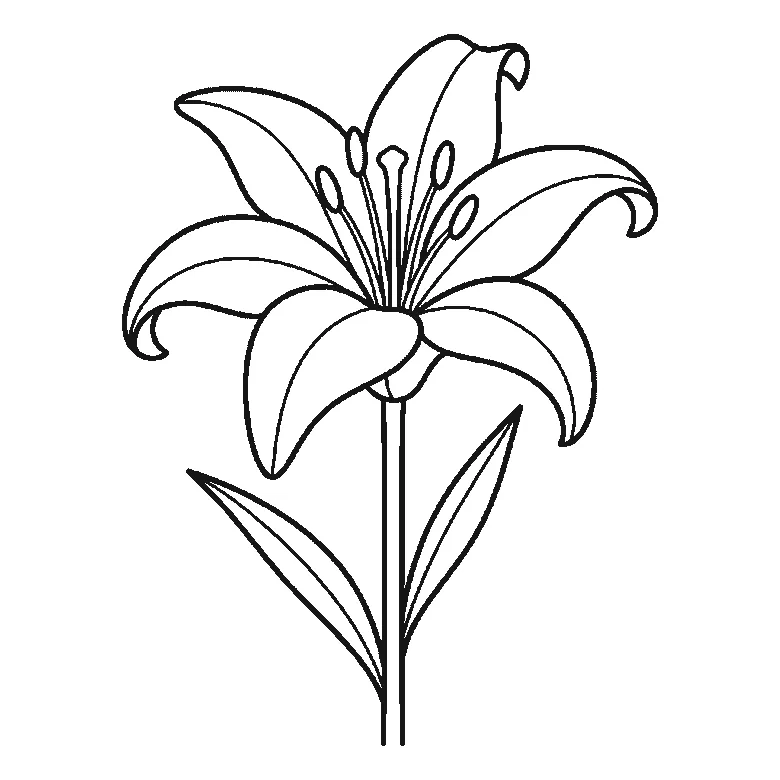
Six frames, one open lily. Three petals in the first frame, the rest two at a time — and the stem, the leaves and the central stamens right at the end.
Step sequence made by us from a single drawing: each step keeps the lines of the one before it and adds to them.
How to draw the moon
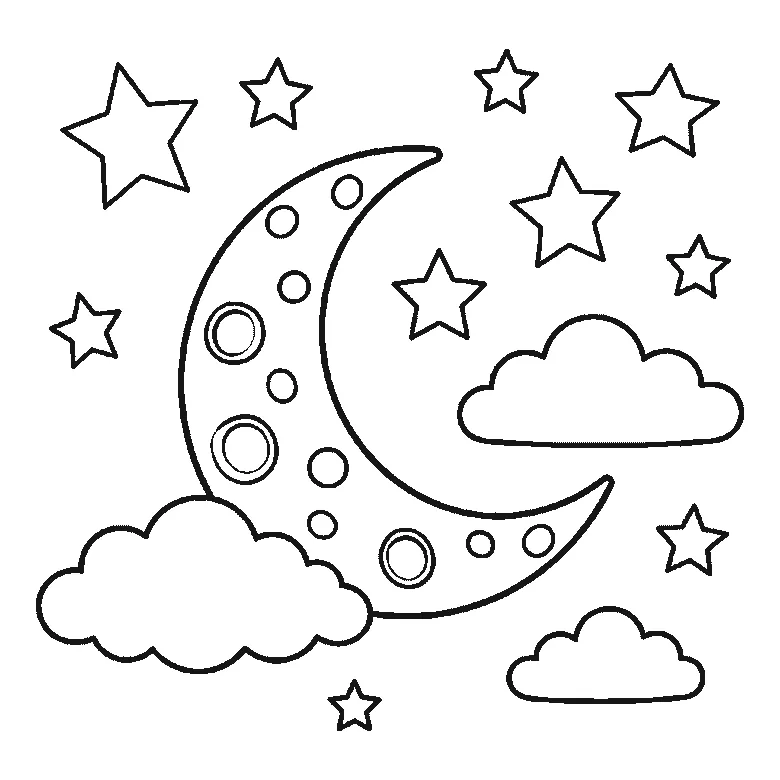
Six frames, a crescent moon in a night sky. The whole moon and every crater arrive in frame one; the five frames after it are clouds and stars.
Step sequence made by us from a single drawing: each step keeps the lines of the one before it and adds to them.
How to draw a volcano
Six frames, one erupting volcano. The whole cone with its lava streams arrives in frame one; the smoke, the ground and the flying lava come after it.
Step sequence made by us from a single drawing: each step keeps the lines of the one before it and adds to them.
How to draw a palm tree
Six frames, one palm tree on a mound of sand. The fronds come first, two at a time; the trunk is not drawn until frame five.
Step sequence made by us from a single drawing: each step keeps the lines of the one before it and adds to them.
How to draw a sunflower
Six frames, one tall sunflower with two leaves and a bud. The seed head and one leaf first — and no petals at all until frame three.
Step sequence made by us from a single drawing: each step keeps the lines of the one before it and adds to them.
How to draw a landscape
Six frames, one countryside scene with hills, a river, a tree, a house and a sun. The leaves come first and the birds last.
Step sequence made by us from a single drawing: each step keeps the lines of the one before it and adds to them.
How to draw a flower
Six frames, one open flower on a stem. Three petals first, then the other three and the stem, the two leaves, and the centre near the end.
Step sequence made by us from a single drawing: each step keeps the lines of the one before it and adds to them.
How to draw a rainbow
Six frames, a rainbow with a cloud at each end and three birds. The clouds first, then the bands from the outside in, and the birds last.
Step sequence made by us from a single drawing: each step keeps the lines of the one before it and adds to them.
How to draw an apple
Six frames, four apples on a leafy branch — three hanging and one on the ground. Two apples first, then the other two, then leaf after leaf.
Step sequence made by us from a single drawing: each step keeps the lines of the one before it and adds to them.
How to draw a rose
Six frames, one open rose. The centre cluster first, then the leaves, the outer petals and the stem.
Step sequence made by us from a single drawing: each step keeps the lines of the one before it and adds to them.
How to draw a star
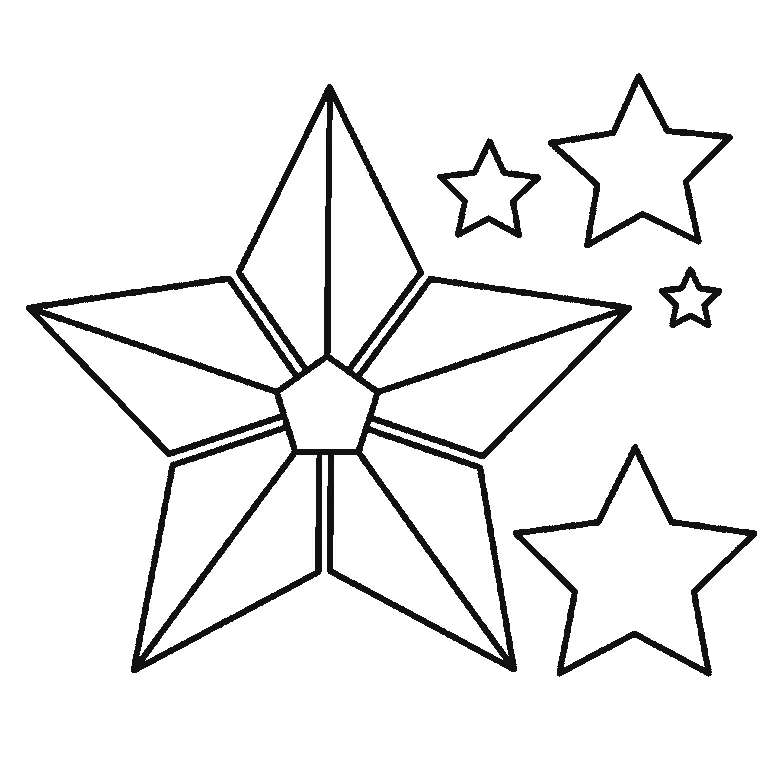
Six frames, one faceted five-pointed star and four smaller ones, built one facet panel at a time.
Step sequence made by us from a single drawing: each step keeps the lines of the one before it and adds to them.


